SEW IFMA December Newsletter
President's Message
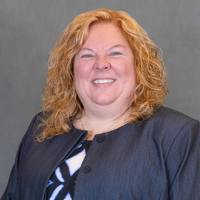
Dear SEW-IFMA Members,
As we approach the holiday season, I extend my warmest wishes for health and happiness to you and your loved ones. I would also like to express my sincere gratitude to all our members—especially our board and committee members—whose dedication and hard work are the foundation of SEW-IFMA’s continued success. Your commitment, and the support of your families, is deeply appreciated as you devote evenings and weekends to advancing our organization.
Looking ahead, I am enthusiastic about the direction in which SEW-IFMA is moving. Together, we are elevating the value and educational opportunities we provide, and we have set ambitious goals for the coming years. With the support of our board of directors, committee chairs, and all our professional and associate members, we are pursuing the following key initiatives:
VA Committee: To honor those who have served, we are launching a VA Committee to raise awareness among veterans about the rewarding opportunities in our field. Our goal is to support veterans transitioning to new careers in facility management.
Sponsorship: Recognizing recent challenges in sponsorship, the Membership Committee will now pursue sponsorship opportunities year-round. We believe this approach will encourage greater participation from our associate members, whose support is vital to our organization’s success.
Bringing World Workplace to Milwaukee: We are actively collaborating with representatives from the City of Milwaukee and IFMA to bring the World Workplace conference to BAIRD in 2028. Meetings are scheduled after Thanksgiving to discuss the RFP and showcase the city’s amenities. If 2028 is not feasible, we will continue to pursue this opportunity for future years.
Please note that these initiatives are in the early stages of development. We will keep you informed of our progress and look forward to sharing our successes.
Thank you once again for your dedication and for making SEW-IFMA more than just an association—it is a community we can all rely on.
Wishing you a joyful holiday season.
Sincerely, Dawn
Dawn Gustafson
Komatsu
[email protected]
General Membership Announcements
Please Welcome our SEW IFMA New Members:
Norman Barrientos Barrientos Design & Consulting, Inc.
Dylan Basterash Kelmann Restoration
Joseph B. Blough CleanPower, LLC
Nick De La Paz The Heimat Group
Tim Einwalter GRAEF
Melissa Germait Grunau
Sean Hayes Grunau
Justin Johnson The Concord Group
Jilian Langer Metro Elevator
Ryan Lee WEC Energy Group
Dave Lubach TPMG
Caree Martens Concept Labs
Dan McCabe First Citizens Bank
Jordan Nelson Quality Power Solutions
Chris Swenson BDPros
Sam Wilshire The Concord Group
Ross Younger BUILTECH
All members should keep their IFMA Member Profiles CURRENT. Make all member profile updates (email, job, etc.) at IFMA International website. The SEW IFMA Chapter website syncs up with the IFMA International website to update your Chapter profile.
Member Job Board - Remember to visit the Job Board at the SEW IFMA website, where we post Facilities Management jobs. Click here to see the current open jobs posted on our site.
Don't forget to check out our SEW IFMA LinkedIn page!
Upcoming Events
|
|
||||
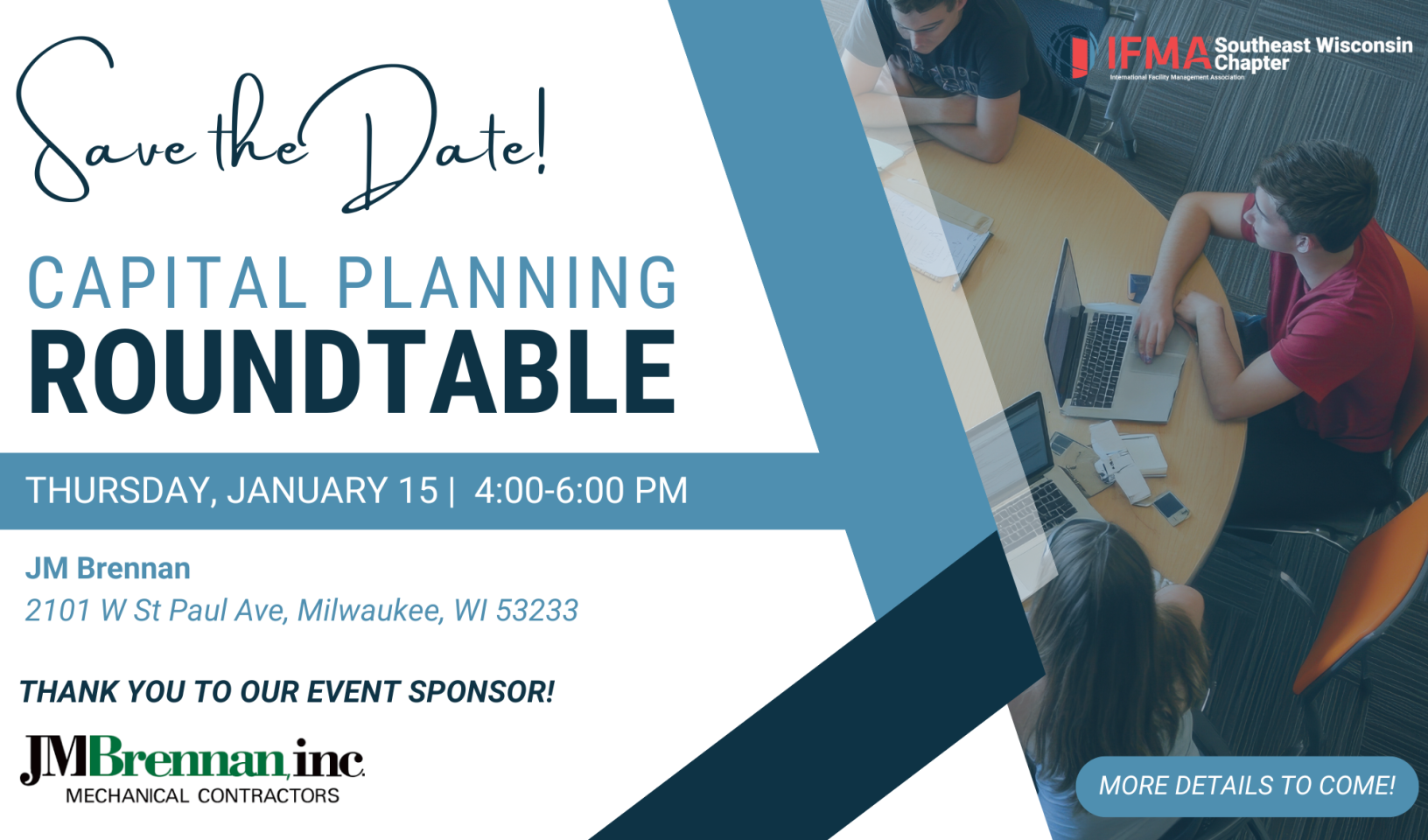
SEW IFMA Capital Planning RoundtableJanuary 15, 2026 | 4:00 PM - 6:00 PM JM Brennan 2101 W St. Paul Ave, Milwaukee, WI 53233
|